
Comfort and technology
What can be done if you are anxious about dental treatment?
Tell the practice before your appointment. At Catford Dental that means noise-cancelling headphones, a quiet relaxation room, warm towels and a treatment plan you see on screen first — so less of the visit is unexpected.
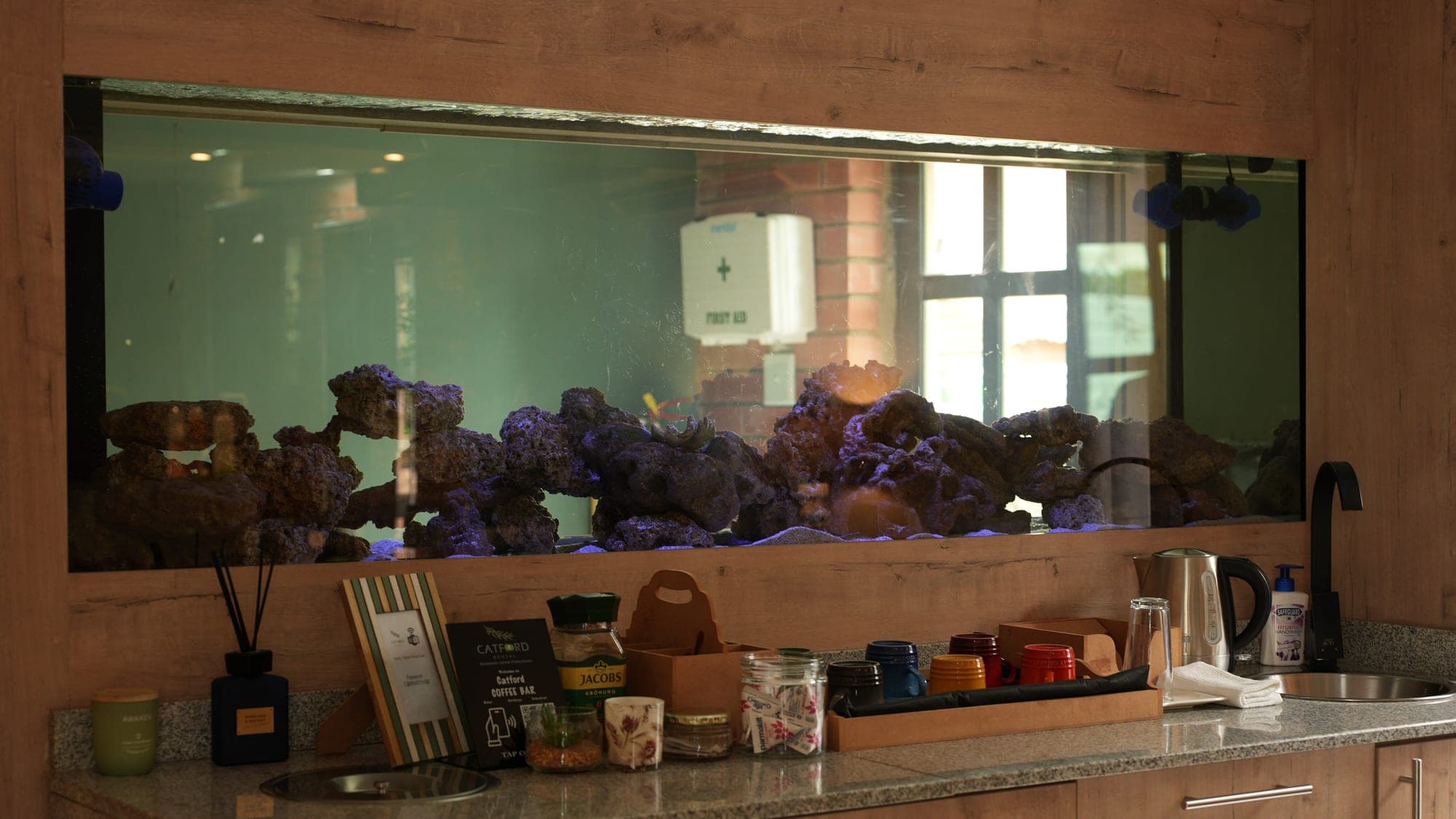
What should you do if you are nervous about coming in?
Say so when you book, and say so again when you arrive. It is the single most useful thing you can do, and it is not an unusual request — a large proportion of adults find dental treatment difficult, and a fair number have avoided it for years because of it.
Being told in advance changes how an appointment is run. It affects how much time is allowed, how much is explained before it happens, and whether a first visit is a treatment at all rather than a look, a conversation and a plan. Nothing has to be done on the day you first walk in.
Two things help more than most people expect. The first is a stop signal — an agreed hand gesture that pauses treatment immediately, no explanation needed. Knowing you can stop is often what makes it possible not to. The second is knowing what is coming: what the next instrument does, what it will sound like, how long it will take. Most dental fear is fear of the unexpected, and it responds well to being narrated.
It is also worth saying which part is the difficult part, because they are treated differently. Fear of needles, fear of the drill noise, gagging, a bad experience years ago, and simply not liking being unable to see what is happening are five different problems with five different accommodations.
If you have not been to a dental professional in years, that is a reason to book rather than a reason not to. It is a common situation and it is not a subject for comment.
What is on the comfort menu?
The comfort menu is a short list of things you can ask for. It exists because most patients will not ask unprompted, and because small adjustments make a disproportionate difference to how an appointment feels.
You choose what you want when you arrive. None of it needs to be arranged in advance and none of it is treated as a special request.
- Noise-cancelling headphones, with your own music or a podcast — the sound of dental equipment is what many people find hardest, and removing it removes most of the problem.
- A beverage before or after treatment: herbal tea, coffee or water.
- A massage chair in the relaxation room, which can be used before an appointment to settle, or afterwards.
- Aromatherapy, which changes the smell of the room — clinical smells are a strong trigger for people with a bad past experience.
- Lip balm, and a warm towel afterwards.
- Access to the library while you wait, with books for adults and for children.
Do you still have to bite into a tray of impression material?
No. Impressions are taken with an intraoral scanner — a 3Shape TRIOS — which is a small camera passed over the teeth to build a 3D model on screen. Nothing sets in your mouth, nothing has to be held still while it hardens, and there is no material at the back of your palate.
For anyone who gags, that change is the difference between a tolerable appointment and an impossible one. It also removes the retake: a scan that has missed an area is corrected by rescanning that area, rather than by repeating the whole impression.
The model appears in real time, which means you can see what the dental professional is seeing while they are seeing it. A cracked cusp or a worn edge is a great deal easier to understand as a magnified 3D image than as a description. It also means a proposed restoration can be shown and discussed before treatment starts.
Photography is used alongside the scan. High-quality clinical photographs record how the teeth, gums and lips relate to each other, which is what a restoration has to fit into. They go to the dental laboratory with the case so that a veneer or crown is made to match the teeth beside it, they document the starting point so change can be tracked, and they give you something to look at when a treatment is being explained.
Are dental X-rays safe?
Dental radiographs use a very small dose of radiation, and digital sensors need substantially less of it than the film they replaced. The dose from routine dental imaging is small relative to the background radiation everyone is exposed to simply by living.
That does not make radiographs automatic. They are taken when there is a clinical reason — checking between teeth where decay is not visible, assessing bone levels, looking at the root tip of a painful tooth, or planning treatment — and not as a matter of routine at every visit.
The practical advantage of digital imaging is that the image appears immediately on the screen beside you. There is no processing wait, the image can be enlarged and adjusted, and it can be shown to you and explained during the same appointment rather than reported back later.
If you are pregnant or think you may be, say so before any imaging is taken.
Does a professional clean have to be uncomfortable?
For patients with sensitive teeth or receding gums, a traditional scale and polish is often the part of dentistry they dread most. That is what guided cleaning is intended to address.
Instead of relying on scraping alone, the system directs a fine powder in a stream of warm, pressure-controlled water at the tooth surface. It lifts plaque, biofilm and surface staining, including from around the gum margin and between teeth, and because the water is warmed rather than cold, one of the main triggers for sensitivity is removed.
The cleaning is also guided rather than uniform. A disclosing agent stains the plaque so that both you and the dental professional can see exactly where it is, the deposits are removed with that as the map, and the same picture shows you where your brushing and cleaning between teeth is actually missing. That last part is the point — a clean lasts a few months, but knowing which surfaces you consistently miss changes the next few years.
Hardened tartar still needs instrumentation to remove, so this supplements scaling rather than replacing it entirely.
Some sensitivity during or after a professional clean is normal, particularly where gums have receded or roots are exposed. Tell the dental professional during the appointment rather than afterwards — the technique, temperature and pressure can be adjusted as they go.
How are your records kept?
The practice is paperless. Records are held in GoodX, a practice management system used widely in South African healthcare, with files stored on an encrypted cloud platform rather than in a filing cabinet.
For you, that mostly shows up as things that do not go wrong. Your history, radiographs, scans and photographs are in one place and available at either practice, so a record does not have to be requested, posted or recreated. Radiographs taken two years ago sit beside today's, which is how slow change gets noticed. Appointment scheduling, recalls and treatment plans run off the same system.
You are entitled to a copy of your own records, and to have them transferred if you move to another practice. Ask reception.
Common questions
Is dental treatment painful?
The practice takes every bit of care to make treatment as comfortable as possible. Anything that could be uncomfortable is done under local anaesthetic, numbing gel is applied before the injection itself, and treatment is paced to you rather than rushed. You can agree a hand signal beforehand and stop at any point, without having to explain why. Most patients tell us afterwards it was easier than they expected. Tell us at booking that you are nervous — it changes how the appointment is planned.
I have not seen a dental professional in years. Will I be judged?
No. Long gaps are common, usually caused by anxiety, cost or a bad past experience, and none of those are unusual. Say at the booking that it has been a long time and that you are nervous — a first visit can be a look and a conversation, with no treatment on the day.
Can I stop treatment part-way through if I need to?
Yes. Agree a hand signal before starting and treatment pauses when you raise it. You do not need to justify it, and knowing the option exists is often what makes an appointment manageable.
Do I have to have impression moulds taken?
Not for most work. Digital scanning with an intraoral camera replaces conventional impression trays, so there is no material setting in your mouth. This matters most for patients who gag.
How much radiation is in a dental X-ray?
Very little. Digital sensors use a substantially lower dose than the film they replaced, and the dose from routine dental imaging is small compared with everyday background radiation. Radiographs are taken when there is a clinical reason, not automatically at every visit.
Will a professional clean hurt if my teeth are sensitive?
It should not, and it can usually be adjusted so it does not. Guided cleaning uses fine powder in warmed, pressure-controlled water rather than scraping alone, which removes one common trigger. Say during the appointment if anything is uncomfortable so the technique can be changed.
Can I bring someone with me?
Yes. Many patients find an appointment easier with someone they know present, and the reception, library and relaxation areas are there for anyone accompanying you.