
Replacing a missing tooth
Can a missing tooth be replaced without crowning the teeth either side?
Yes. A fibre-reinforced bridge bonds a replacement tooth to the neighbouring teeth using woven Ribbond fibre, with only a shallow groove cut rather than full crown preparation. It can often be completed in a single appointment.
 Before
 After
AfterWhat is a fibre bridge?
It is a replacement tooth held in place by a strip of woven fibre bonded to the teeth on either side of the gap, with tooth-coloured composite built over it.
There is no metal, no laboratory-made framework and no crown. The whole restoration is built directly in the mouth, in one appointment, out of materials that bond to enamel.
The reason this matters is what it does not do. A conventional bridge needs the two teeth either side reduced on all sides so crowns can be seated over them — a permanent change to two otherwise healthy teeth in order to replace a third. A fibre bridge asks far less of them.
Why Ribbond rather than another fibre?
Not all dental fibres behave the same way. Ribbond is made from ultra-high molecular weight polyethylene, the same polymer family used in ballistic fabrics, chosen in dentistry because it resists fracture and tolerates repeated stress without becoming brittle.
The weave is the other half of it. Ribbond uses a patented cross-link lock-stitch leno weave rather than a simple parallel bundle. A leno weave locks the fibre crossings so the strip holds its shape when it is adapted around a curve, and load applied at one point is distributed across the whole ribbon rather than travelling along a single strand.
In practical terms that means the fibre can be shaped to follow the contour of the teeth and the gap, and it stays where it is put while the adhesive is cured.
The polyethylene used in Ribbond is the same material class used in ballistic fabric. That describes the raw fibre, not the finished restoration — a fibre bridge is a dental restoration and, like every restoration, it can fail under enough force.
What happens during the procedure?
The sequence below is the one the practice documents. It is genuinely stepwise, and it is usually completed within a single appointment.
- The gap is measured and a replacement tooth is sized against it, so the base sits at the right width and height for your bite and the neighbouring teeth.
- The underside of the replacement tooth is highly polished. This is not cosmetic — a smooth base at the gum makes the finished bridge far easier to clean, and cleanability is what determines how long it lasts.
- The base is bonded to the teeth either side.
- A shallow retention groove is prepared across the back of the anchor teeth and the base — approximately 1.5 mm deep and 2 mm wide. This is the only tooth structure removed, and it is a fraction of what crown preparation takes.
- A strip of foil is used to measure the exact fibre length needed across the span, and the Ribbond is cut to that guide.
- The fibre is bonded into the retention groove and cured.
- A second piece of fibre is placed across the front surface for added strength.
- Composite is layered over the framework, shaped to match the neighbouring teeth, and the bite is checked and adjusted.
How does it compare with a conventional bridge or an implant?
The honest comparison is a trade-off, not a ranking. A fibre bridge is the most conservative of the three and the quickest — no crown preparation, no surgery, no laboratory wait, usually one visit. It is also the most straightforward to repair, and if it does fail, the teeth underneath have not been permanently reduced, so every other option is still open.
A traditional bridge is the most established and generally the more robust across a longer span, but it costs you two healthy teeth to get there. An implant does not involve the neighbouring teeth at all and preserves the bone where the tooth was lost, but it requires surgery, sufficient bone, and several months of healing before the tooth is finished.
Where a fibre bridge tends to be chosen: a single missing tooth, healthy teeth on both sides that you would rather not crown, a patient who wants the gap closed now, or as a durable interim solution while deciding on an implant.
How long does a fibre bridge last?
We quote an average of three years, and that is the figure worth planning around.
It is deliberately the conservative number. Published data supports stability of up to five years, and this practice has records of fibre bridges still in service after nine. But nine years is the outlier, not the expectation — quoting it as though it were typical would set you up for disappointment.
Be clear-eyed about what that means in comparison. A well-made conventional bridge or an implant will generally last longer than three years. A fibre bridge costs less and takes far less tooth structure from the teeth either side, and the trade-off is that it is more likely to need attention or replacement sooner.
Whether that trade is worth making depends on your circumstances. For a younger patient, keeping the neighbouring teeth uncut has real long-term value even if the bridge itself is replaced once or twice — you still have your own teeth to work with. Where longevity matters more than conservation, a different option may serve you better, and you should be told so.
What most affects how long yours lasts is cleaning underneath it, your bite, and whether you grind.
These figures are the practice's own experience and the published evidence as we read it. They are not a guarantee, and no restoration is permanent.
How do you look after a fibre bridge?
The same way you look after a conventional bridge, with one addition: you must clean underneath it.
The replacement tooth sits against the gum but is not attached to it, so the space beneath needs a floss threader, interdental brush or water flosser daily. Ordinary flossing cannot reach it, because the bridge is a single connected span. This is the single biggest determinant of how long the restoration lasts.
Beyond that: normal brushing twice daily, and regular check-ups so the bond margins can be inspected. Avoid using the bridged tooth to bite into anything hard — ice, bones, hard sweets, or opening packaging.
When is a fibre bridge not the right choice?
Where the teeth either side are already heavily restored, badly broken down or loose, they cannot reliably anchor a bonded span. Where a tooth on one side is already going to need a crown for its own reasons, a conventional bridge may make more sense, because the preparation is happening anyway.
Longer spans are harder. The wider the gap, the more the framework flexes under load, and flexing is what breaks bonds. Multiple adjacent missing teeth generally point towards a denture or implants.
A heavy bite, significant grinding or a deep overbite that loads the replacement tooth directly all increase the risk of debonding. These are assessable before treatment, and should be raised with you rather than discovered afterwards.
Adequate enamel on the anchor teeth is required for the bond to hold. That is checked at examination, and if it is not there, you should be told so before treatment is booked.
Placing a Ribbond fibre-reinforced anterior bridge
The five-step protocol used at Catford Dental to replace a single missing front tooth with a bonded polyethylene fibre framework, in one appointment and without crowning the adjacent teeth.
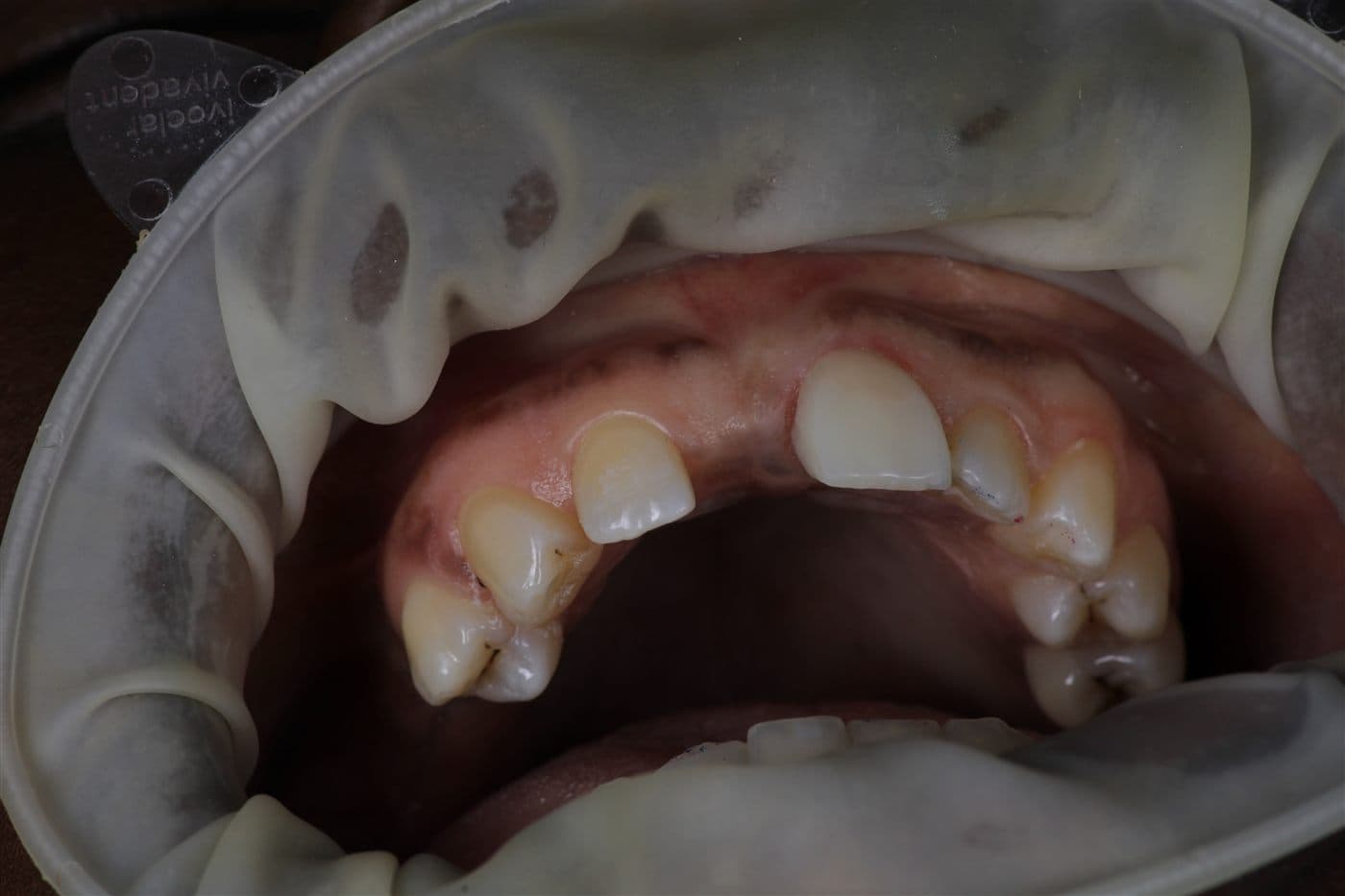
01 Designing the pontic base
The replacement tooth is shaped so its underside meets the gum ridge smoothly, then polished. This is the step that decides whether the finished bridge can be cleaned: the base is contoured either as a ridge lap or an ovate pontic depending on the ridge, and enough space is kept beneath it for a floss threader to pass. It is the most important step of the five, and the one most often rushed.
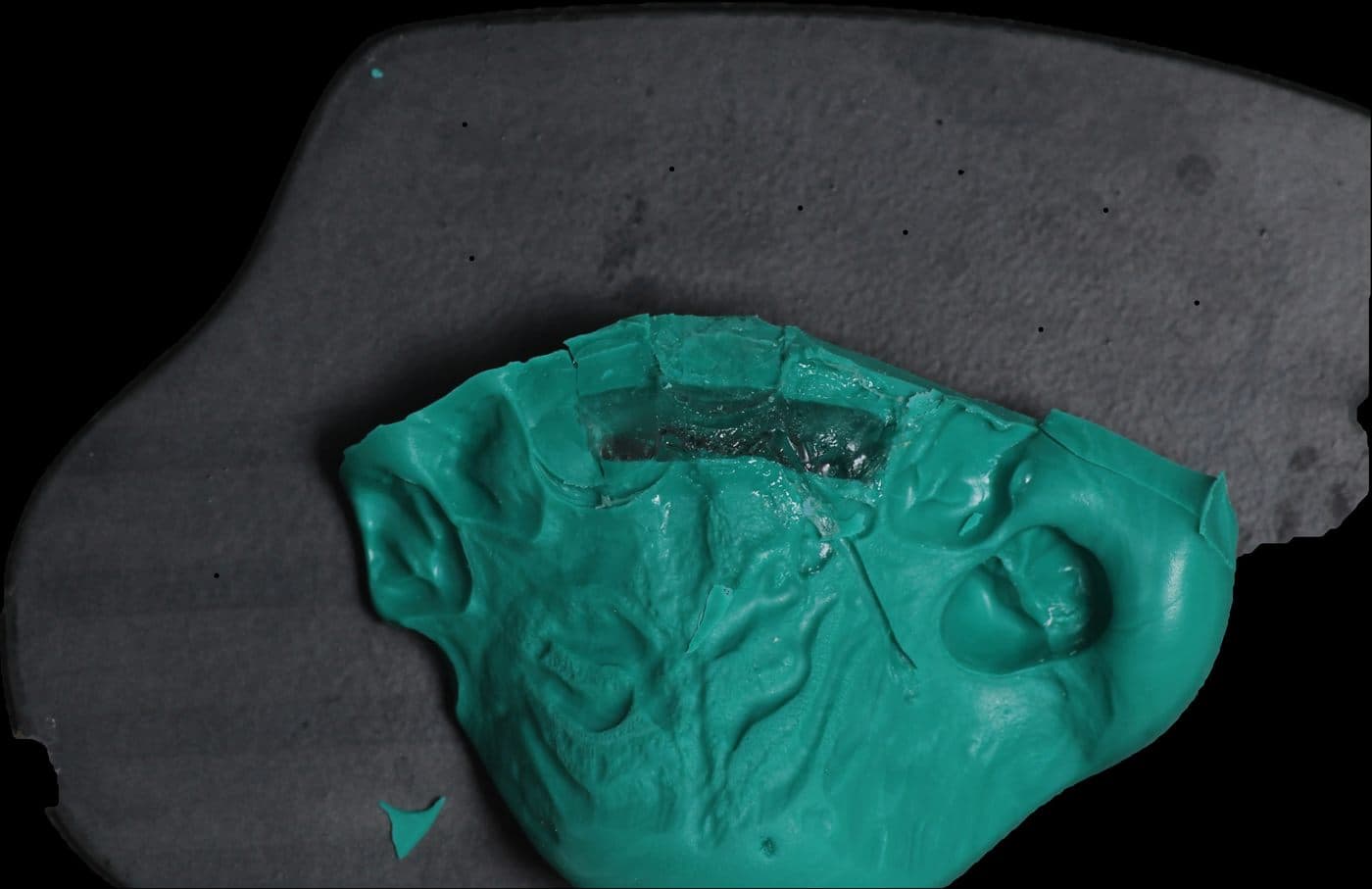
02 Making the clear putty index
A stencil is made from laboratory putty with a window cut into it and clear silicone set into the window. Adapted to the arch and allowed to set, it holds the fibre firmly against the anchor teeth while the adhesive is cured through the clear window. This solves the specific problem of the fibre lifting out of position as an opaque index is removed.
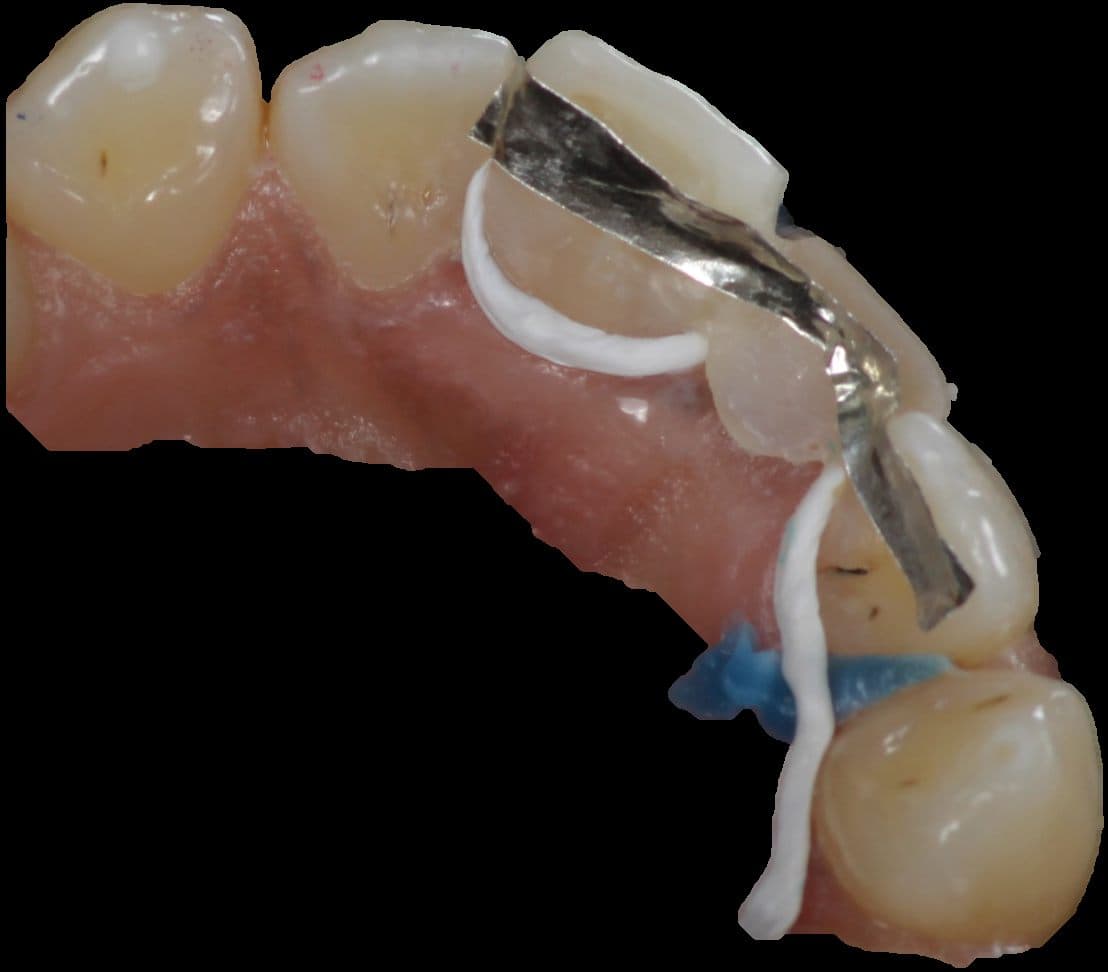
03 Preparing the teeth and adapting the fibre
A shallow groove is cut into the adjacent teeth with a round bur, about 1 mm deep and 2 to 3 mm wide — minimal, and reversible. The fibre is measured against the span, cut, and wetted with unfilled resin for five minutes with no primer or etch. It is adapted into a C shape at each connector so that biting and side-to-side movement load the framework evenly, and a second piece is laid over each anchor tooth to thicken it where the stress is highest.
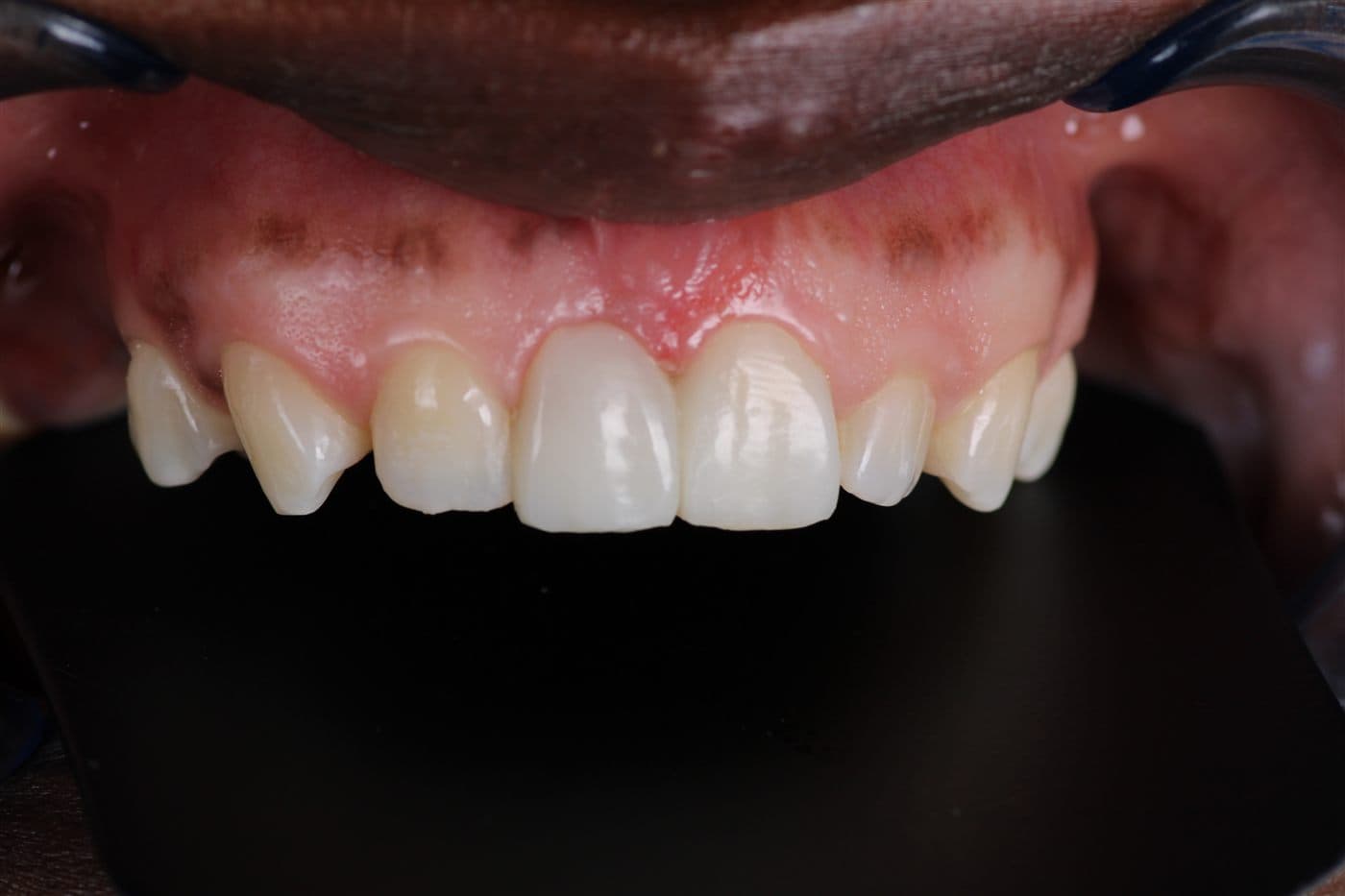
04 Building and finishing the restoration
Composite is layered over the framework and shaped to the neighbouring teeth, including the palatal surface, then finished to the bite. Polishing is done in stages — a two-step polisher at 7 000 rpm then 13 000 rpm, followed by zirconium paste on a goat-hair brush at 7 000 rpm — because the surface finish is what keeps the restoration looking like a tooth rather than a repair.
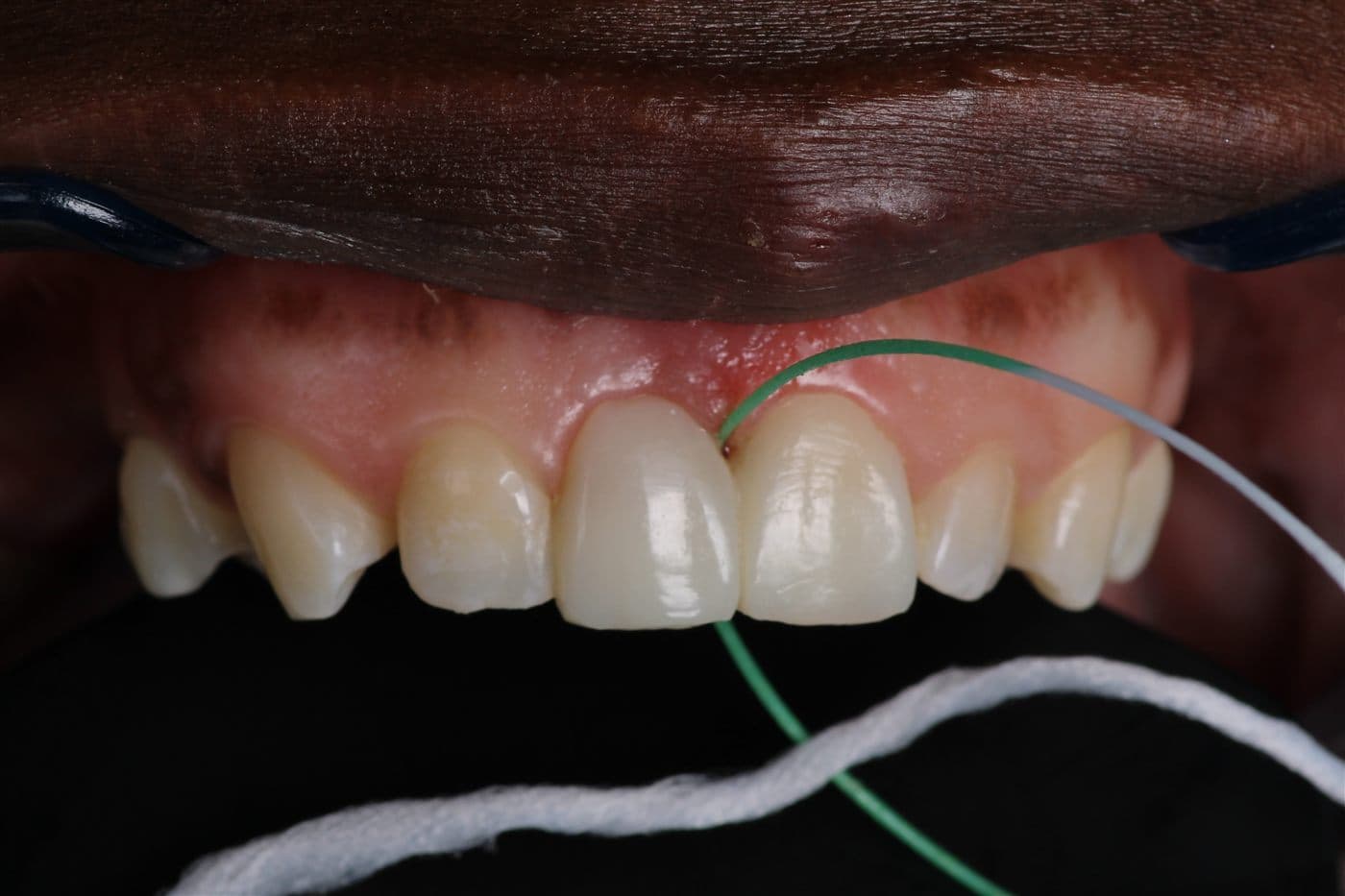
05 Hygiene, before you leave
The patient is shown how to clean underneath the bridge and floss is tested with them in the chair, not described. The space beneath the replacement tooth cannot be reached by ordinary flossing, and how well it is cleaned is the single biggest determinant of how long the restoration lasts.
Common questions
How long does a fibre bridge last?
There is no fixed figure, and it depends heavily on the span length, your bite, whether you grind, and how well the underside is cleaned. It is generally regarded as a longer-term restoration rather than a permanent one, and it can usually be repaired or replaced without further loss of tooth structure.
Does it damage the teeth either side?
Far less than a conventional bridge. A shallow retention groove of roughly 1.5 mm depth is prepared, compared with reduction of the entire tooth on all sides for a crown. It is minimal preparation rather than no preparation, and that distinction is worth being clear about.
Can a fibre bridge be removed later if I want an implant?
Yes. Because it is bonded rather than cemented over reduced teeth, it can be sectioned off and the anchor teeth restored. Many patients use a fibre bridge to close the gap while bone healing or a decision on implants is pending.
Will it match my other teeth?
The composite is shade-matched to the neighbouring teeth and layered to reproduce their translucency. Match is generally good, though composite can pick up staining over years in the way natural enamel does, and it does not respond to whitening gel.
Can it replace more than one tooth?
Sometimes, but the risk rises with the span. Each additional tooth increases how much the framework flexes under chewing force, which is what causes bonds to fail. Multiple missing teeth are usually better served by a denture or implants, and you should expect that to be said plainly.
What happens if it breaks or comes loose?
It can usually be repaired directly in the chair rather than remade, because the framework and the composite are both bonded materials. Contact the practice rather than leaving it — a partially debonded bridge traps plaque against the anchor teeth.
Evidence and further reading
- van Heumen CCM, van Dijken JWV, Tanner J, Pikaar R, Lassila LVJ, Creugers NHJ, Vallittu PK, Kreulen CM (2009). Five-year survival of 3-unit fiber-reinforced composite fixed partial dentures in the anterior area. Dental Materials 25:820–7
Reported 89.7% survival at five years for three-unit fibre-reinforced bridges replacing a front tooth. The practice's own expectation, set out above, is more conservative than this — what a study reports under trial conditions and what a particular mouth does are not the same thing, and you should plan around the lower figure.